Antique Wood Floor
Whether your antique wood floor was Reclaimed or Salvaged,
What a Great Way to Get a Wood Floor
Without Cutting Down a Tree!
"Reclaimed"material used to be something other than flooring, but now has been re-milled with new joinery and a full wear layer thickness above the nails.
"Salvaged"flooring was someone else's floor. Its wear layer thickness depends on how many times it has already been sanded.
Both are noble re-uses. Both are a great value and even fun! This page is all about connecting the have's with the have not's.

Are you of a reuse/recycle kind of mind?
Or, just someone who recognizes value?
Save Money! Save a Few Trees, Too! Connect here with others who either:
- have flooring for the asking
OR
- are asking for the flooring
OR
- have reclaimable wood for flooring.
There's no more affordable way to get a wood floor
AND
the story that comes with it!
Post your notice here. You are standing in front of a BIG bulletin board, so
don't leave out a thing. YOU ARE NOT TEXTING, HERE!
Include all the information, PLUS photos, you would need if you were on the other end of the exchange, (i.e. location, condition, quantity, price, if any.)
Do you have a moisture meter? If so, that reading is VERY important.
What Other Visitors Have Said
Click below to see contributions from other visitors to this page...
Reclaimed Oak Flooring, circa 1920
Reclaimed flooring for sale. Oak tongue and groove from a 1920's house.
Very good condition. Nails are still in the flooring. Two widths of board. …
Do you own a twenty-year-old floor? Check out the board lengths...seven, eight, nine footers all over the place, right? Any aces? Nope. Deuces? A few. And the grade is remarkably clear isn't it?
They don't make'em like that any more...unless, of course, money is no object. In fact, if your oak floor was put down in the late sixties there's a good chance your builder gave you the choice of oak or plywood
and he didn't care which one you chose because the price was the same...
I hope every new floor I've installed these past twenty-five years becomes an antique wood floor someday. In automobile years, my first floors already are antiques. Troubling thought.
New wood simply cannot match old wood.
Even if you could mix stains and finish to achieve a color match today, that's only today. In time your new color will darken
beyond the color of whatever you originally were trying to match.
Better to let nature take its course. Forgive the fresh material for being new and wait for it to get a little older. If you have matched wood species correctly,
your patience will be rewarded. But that's only if you are stuck using new material.
For an immediate match, can you harvest flooring from your existing floor?
Choose as inconspicuous a spot as
you can from which to remove the flooring. The Conservancy's
video on proper tear out of an antique wood floor for harvesting might be helpful.
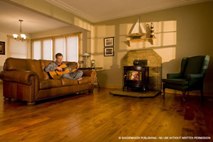
The other possibility, and it's a good possibility, is that your antique wood floor has a long lost brother in an old structure scheduled for demolition. All over the country, flooring is
being salvaged and stored, thank goodness. It's just a matter of finding the warehouse of just such a demolition firm. Check out your local yellow pages. Look under Architectural Antiques or Architectural Salvage.
And it really should be local. Not that your flooring was made from local wood, but no doubt all the buildings in your vicinity were supplied with lumber from the
same one or two lumber yards with the same mill brands. Ah, simpler days...
Something else you have in that twenty or thirty-year-old floor? Patina. A warmer color quality. Everything in this old world oxidizes, present company included.
On iron, rust. In wood, patina. Me, liver spots and a farmer's tan.
Building with reclaimed and salvaged?
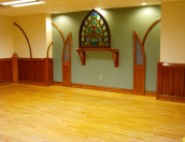
Perhaps you don't have a wood floor at all. You may not even have a house. But you're building one and the design calls for an antique wood floor. Salvaged
flooring, as described above, is one option. Reclaimed lumber milled into new flooring is another and may be preferred. Old flooring, whether salvaged or reclaimed, is structurally denser. I mean on a cellular level, the wood has collapsed and become harder. Moisture contributes greatly to this process.
Because reclaimed lumber is sourced from exterior environments like barns, it has seen greater moisture, greater humidity swings, and stands a good chance of being denser for it. Check out a place like Weatheredwood.
Again, humidity swings in homes cannot rival that of out buildings. The moisture petrifies the wood. In fact, timber from river bottoms makes as durable a floor as
you're going to find. Do not have young children within ear-shot of the installer as he replaces saw blade after saw blade.
Return to Top of Antique Wood Floor
Made possible, in part, by:

 School of Lower Learning
Director's Welcome
Below the Outlets


Student Newspaper
Floorwrights
Local News
855 Village Center Drive, #334
North Oaks, MN 55127
651-490-5776
By Jerald Adamsson, Copyright 2007 - 2023
www.woodfloorconservancy.org
ALL RIGHTS RESERVED